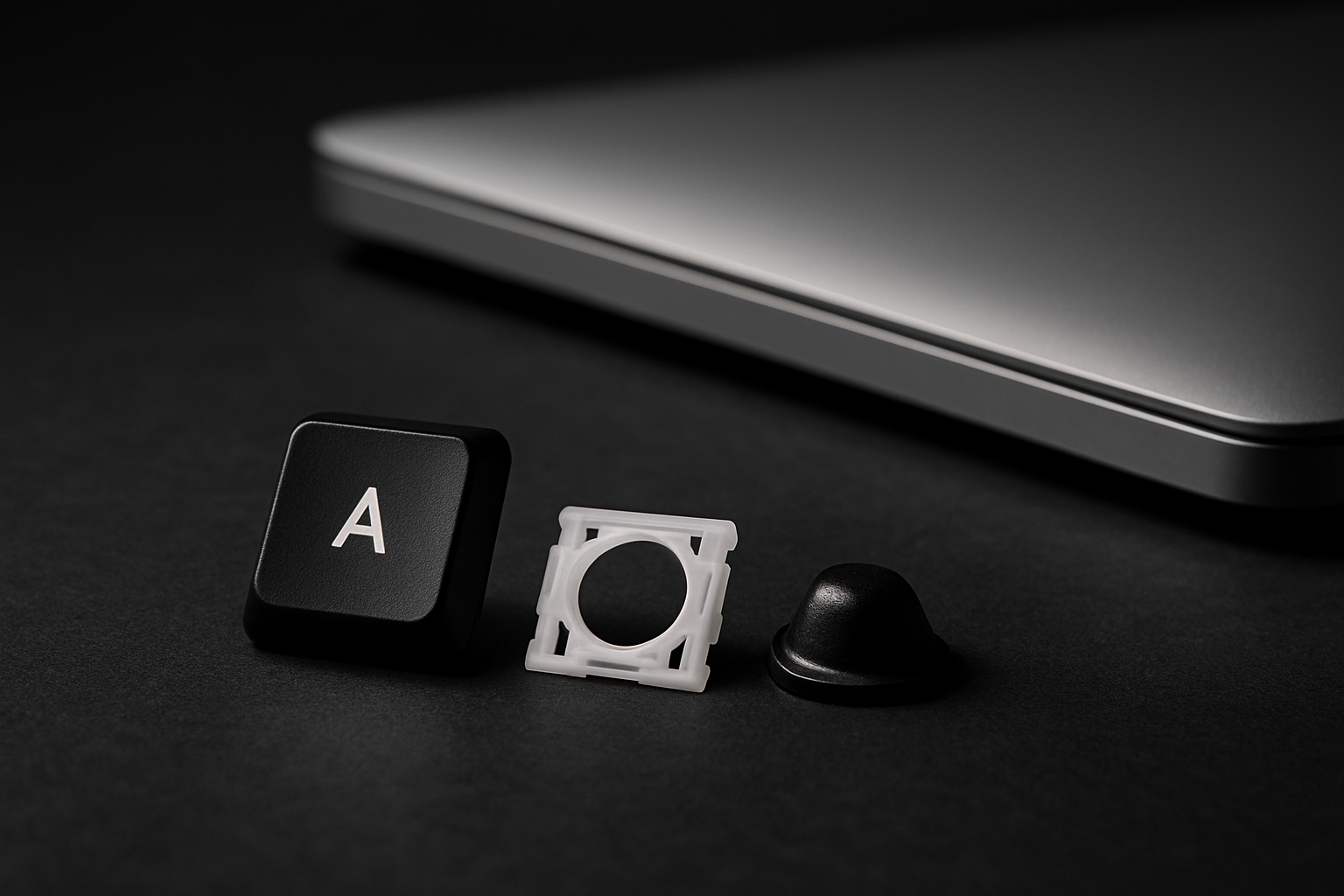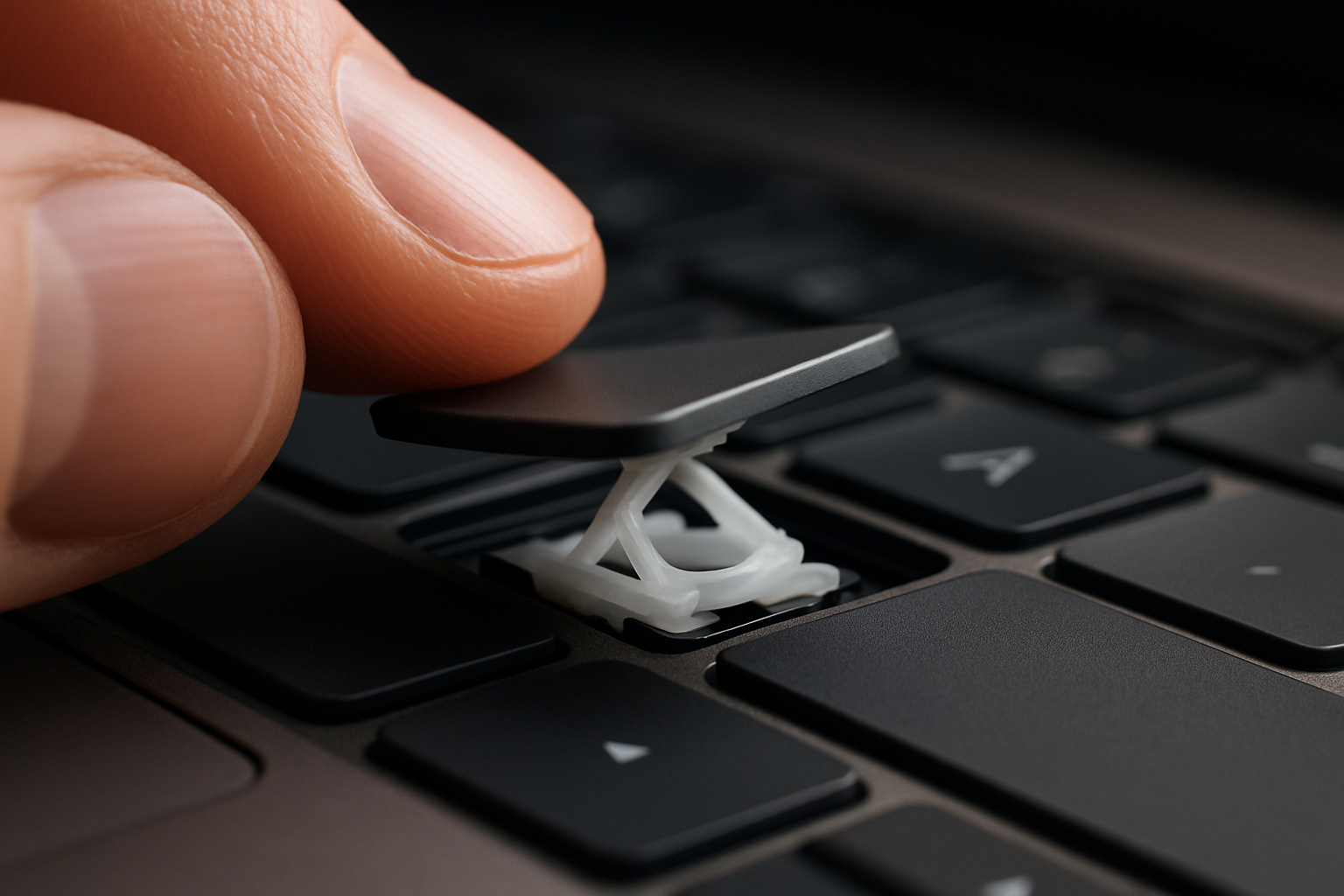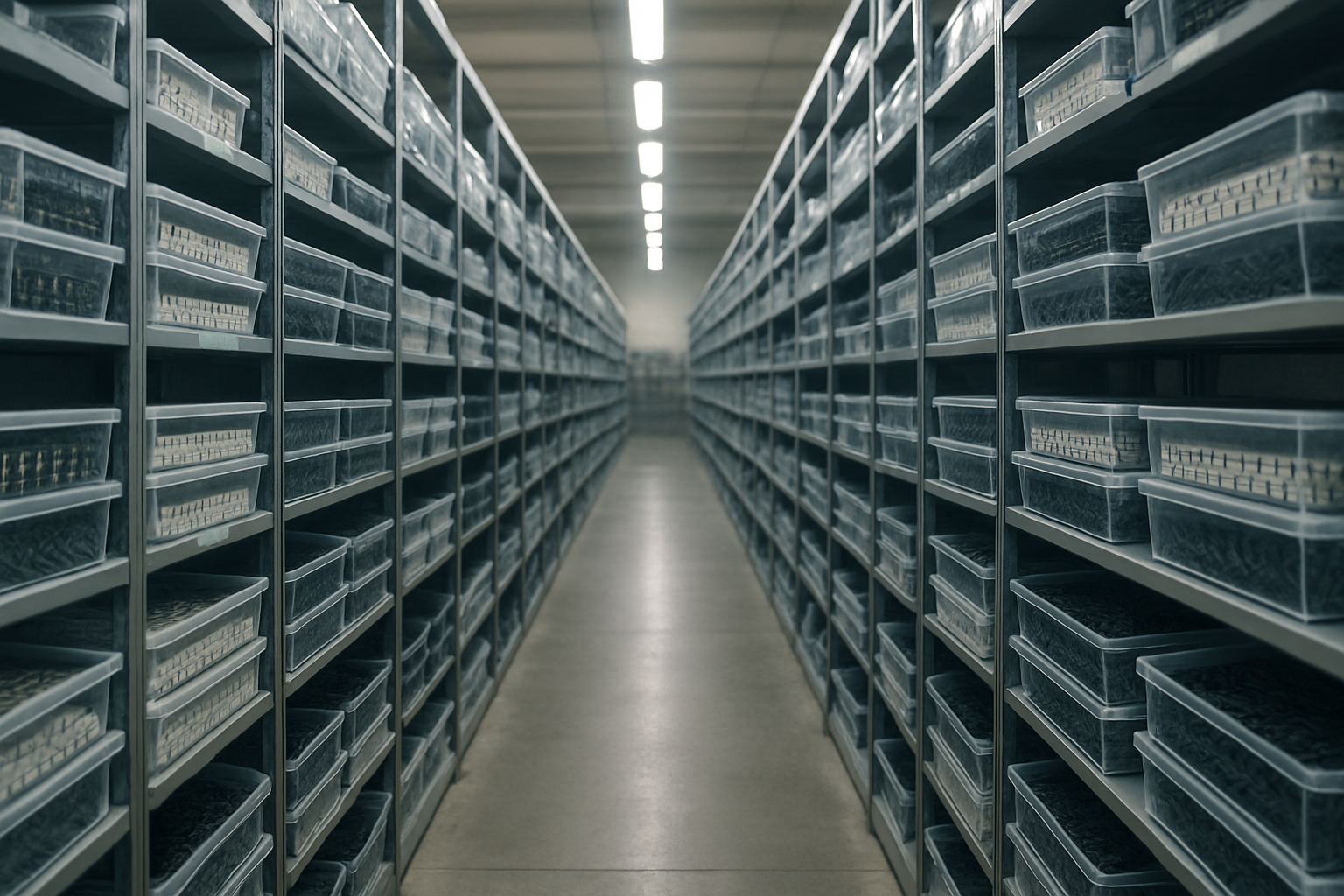
People ask us this a lot: "Are these the same keys that came with the laptop, or are they third-party copies?" Fair question — there's a lot of aftermarket junk on Amazon and eBay that looks fine in photos and cracks on first install. So here's how we actually source.
Where the keys come from
Every part we ship is OEM — built on the original tooling by the factories that supplied the laptop brand. We get them three ways:
- Direct factory surplus. When a model ends its production run, the OEM keyboard supplier still has parts inventory. We buy those parts in bulk before they're scrapped.
- Service-channel stock. The same parts the brand's own service centers use for warranty repairs. We've built relationships with regional distributors over two decades that give us access to this channel.
- Tested pull from new keyboards. For older models where factory stock is dry, we'll buy unused replacement keyboards, harvest individual parts, and inspect each one before listing.
We don't sell aftermarket molds, and we won't list a key kit unless we have actual stock on hand of the actual original part.
Why OEM matters for a five-dollar part
Aftermarket keycaps look identical in the listing photo. They fail in three ways:
- The latch geometry is off by half a millimeter. Clip won't snap properly, key feels loose or pops off.
- The plastic is softer than original. Cracks within a few months of normal typing.
- The legend is printed instead of laser-etched. Letters wear off in under a year.
OEM parts are made on the same machine, from the same plastic compound, with the same etching process as the keys you've been typing on for the last three years. That's the only way we can promise a kit you install today will still feel right in five years.
The 192,000-SKU database
The hardest part of this business isn't sourcing — it's knowing which key fits which laptop. A single Dell Latitude chassis can ship with four different keyboard variants depending on region, year, and configuration. Get the variant wrong and the clip won't latch.
We've been building our model database since 2007. Every keyboard we receive gets photographed, measured, and cross-referenced with the laptop models it ships in. The result is the dataset behind our search: 192,000+ model variants, each mapped to the exact clip, cup, and cap that fits.
If you've ever wondered why we ask for your exact model number rather than just "Dell laptop" — this is why.
What happens when we get it wrong
Occasionally a model ships with two different supplier keyboards in the same year and our database lists the wrong one for your serial. When that happens: photo us the part you received plus the empty slot, and we ship the correct one free. See our returns policy — it's been the same since 2007.
The longer story
We started in 2007 as a husband-and-wife repair shop that kept running into the same problem: customers needed one key, the brand only sold whole keyboards. We started buying keyboards, harvesting individual parts, and selling them. Nineteen years later we're shipping to all fifty states and a few dozen other countries, but the model is the same — buy the part you need, not the assembly.